Showing posts with label Vietnam. Show all posts

Wednesday, November 19, 2025

286. Vietnamese film director Pham Ngoc Lan's debut feature film "Cu Li Never Cries" (Cu Li khong bao gio khoc) (2024) (Vietnam), based on his original screenplay, co-authored with Ngiehm Qyunh Trang: Intelligently interplaying time with history, tradition and family life in unified Vietnam as two ordinary Vietnamese lovers decide to get married


"They say live in the now as much as you can. But the past returns regardless. Un-whole. Fragmented. Existing in pieces of experience."
--- words spoken, underscoring the importance of time, by the elderly aunt of the young lady, Van, who wants to get married, following an unplanned pregnancy


"Rivers can dry up. Mountains erode. But you remain the same."  
--words spoken, by the aunt, underscoring the mindset of elderly individuals (such as her former colleague) in unified Vietnam, who subscribe to the old ideology of the North, singing/enjoying patriotic songs


Debut feature films by young filmmakers, especially those with original screenplays, are fascinating ever since writer-director Orson Welles made Citizen Kane in 1941. Young Vietnamese filmmaker Pham Ngoc Lan treads the same path decades later with his first feature film made in 2024, where he too, like Welles, has a collaborator (Nghiem Quynh Tranh) on his debut film's script. The film Cu Li Never Cries, though packaged as a bitter-sweet tragi-comedy of the working-class contemporary, unified Vietnam, offers multilayered perspectives of the past, present and future of Vietnamese citizens and their country's tumultuous history. There are occasions when the film resembles a threnody--a song or a lamentation for the dead. At the same time in the film, the elders wistfully look at their past errors in judgement, and wish the younger generation to move forward without repeating the mistakes of their elders. 

Two generations of Vietnam are presented. The first generation saw life in Communist East Germany to be fascinating and emigrated there. The elderly lady, whose husband lived there, has died and she returns to Vietnam from Germany, after a recent trip, with her dead husband's ashes and her husband's pet--a pygmy, slow loris monkey--to her modest living space in Hanoi, which she shares with her young-orphaned niece, Van. Van earns a living as a nanny looking after a few tiny tots, while their biological parents are at work.

Van baby-sits two toddlers as a nanny in her apartment,
to earn an income. Her amputated left arm is never
discussed, but could be a subtle link to the Vietnam war,
as probably was her parents' death.


The film presents the mindset of two contrasting generations in contemporary Vietnam. The recently widowed aunt of Van has brought home the urn containing her dead husband's ashes to be immersed in the river water as per Vietnamese tradition. The younger generation of Van and her partner, merely involves the elders of the family in a quickly arranged betrothal. The rest of the marriage imitates a Caucasian wedding process, though the newlyweds are not Christians, complete with gowns, westernized wedding dresses, songs and dances. Even the elder generation has evolved to enjoy slow ball-dancing as entertainment in the evening of their lives and the widow attracts a young waiter to dance with her, with her pet slow loris perched on his shoulder--perhaps providing a link to her dead husband in her mind.

The screenplay uses the presence of the uninvited slow loris in a creative way to link several strands of the film's structure. Nobody cries in the film. The cinematographer makes us aware of the animal's cute eyes--sad, yet beautiful. 

The sad, yet beautiful eyes of the slow loris,
carried around by Van's aunt in a bag


The dwarf slow loris peers from behind a flower pot
at humans in the room


A broken metal rib of the aunt's umbrella is a clever detail added by the director/scriptwriter to allegorically show her fractured life of past mistakes and present widowhood. The bride is unsure of her future and disappears for a while from the wedding banquet realizing that she is possibly leaving her aunt who had not been happy to learn of the quick decision to marry but the aunt goes searching and finds her, only to present her with the aunt's own necklace as a tacit well-considered final approval of the wedding from the older generation to the newer one. This sequence presents the future of the tale. (The necklace finds pride of place in the film's official poster above.)

The slow loris is called Cu Li, which in many Asian countries resembles the word "coolie'' for a lowly paid worker, who rarely talks back to the master. The sequence in the film where Cu Li  is perched on the waiter's shoulder when the widowed, lonely aunt asks the waiter to dance with her serves as a visual, wistful reminder of her past life. Cu Li possibly is the visual link to the missing presence of her dead husband  with whom she possibly danced in the past. The slow loris, when scared, sweats a toxic liquid, which when the animal licks mixes with its saliva can cause pain/allergic reaction to humans. The kids under the care of Van, the nanny, must have scared Cu Li, and subsequently get skin rashes. Van is upset that Cu Li is sick and "infecting" the kids. Full grown slow lorises are found in thick forests in Vietnam and rarely adopted as pets. The dwarf Cu Li observes quietly the bitter, sweet human tale unfolding around its urban environment as a human would.


Van's recently widowed aunt dances with an obliging,
young waiter who places the dwarf slow loris, Cu Li,
 on his shoulder. Later, in the film, she passes off the waiter
as her son (she never had one), to her former colleague.


The rich narrative of the film is sprinkled with subtle humor. The widowed aunt's former colleague shows off an imposing statue of Ho Chi Minh, looking over a dam that has tamed the Black River, causing some parts of it to run dry, while elsewhere the river dam generates electric power before the residual water flows to merge with those of the Red River, ultimately flowing into the sea. The humorous part of the description includes an aside about the re-positioning of Ho Chi Minh's arm on the statue on account of its weight, which gives the final gesture a different meaning than was originally intended. Earlier in the film young men, including the groom, having a late night picnic, discuss with crude humor the linguistic differences between the populations of the south and north Vietnam.

The film was made on a shoestring budget. Though shot in color, the final black-and-white version was arrived at to trim post-production costs, according to the director, while meeting the press at the Berlin Film Festival 2024, where the film won the best debut film award.

While Cu Li Never Cries is not comparable with debut masterpieces such as Citizen Kane, Sir Ridley Scott's oft-unsung film The Duelists (1977) or Jean-Pierre Melville's Le Silence de la Mer (Silence of the sea) (1949), it is a laudable attempt of a young filmmaker to team up with another screenplay writer to look at their country's history and weave a story that provides a poetic perspective of preserving memory, complete with Van's amputated arm and the death of her parents (a likely indirect reference to the past war years), and Vietnam's fauna, while reconciling completely with the present day unified Vietnam.  

Recent debut films from three different Vietnamese directors are notable: Ash Mayfair's The Third Wife (2018), winner of the Gold Hugo award at the Chicago international film festival, Best Film award at the Kolkata International Film Festival, and minor awards at the Sundance and Toronto film festivals; Thien An Pham's Inside the Yellow Cocoon Shell (2023), winner of the Golden Camera award at the Cannes film festival, the Roberto Rossellini award for the best film at Pingyao International Film Festival (China) and the Best Asian Film award at the Singapore International Film Festival; and finally Pham Ngoc Lan's Cu Li Never Cries (2024), winner of the GWFF Best Feature Film award at the Berlin Film Festival, winner of the Shaji N Karun award for the Best Asian Debut Film at the 20th International Film Festival of Thrissur, winner of the Best Picture award in international competition at the Jeonju International Film Festival (South Korea), winner of the Best Performance award at the Las Palmas Film Festival (Spain) for lead actress Minh Chau (playing the widowed aunt), winner of the NETPAC award for Best Asian First Film at the QCinema International Film Festival, winner of a special mention at the Bucharest International Experimental Film Festival (Romania), Vietnamese cinema is indeed on the march with these three young filmmakers leading a revival of a new kind. Coincidentally, both The Third Wife and Cu Li Never Cries share the same film editor: Julie Beziau.

This critic was the chairperson of the main jury of the 20th International Film Festival of Thrissur (India) that awarded the inaugural Shaji N Karun Award for the Best Asian Debut Film to Cu Li Never Cries. The citation of the award bestowed by the festival jury also highlights the editing of the film.


P.S. Four debut films mentioned in the above review have been discussed in detail earlier on this blog: The Duelists (1977); La Silence de la Mer (1949); The Third Wife (2018); and  Inside the Yellow Cocoon Shell (2023). (Click on the names of the films mentioned in the post-script to access the reviews.)


Tuesday, January 09, 2024

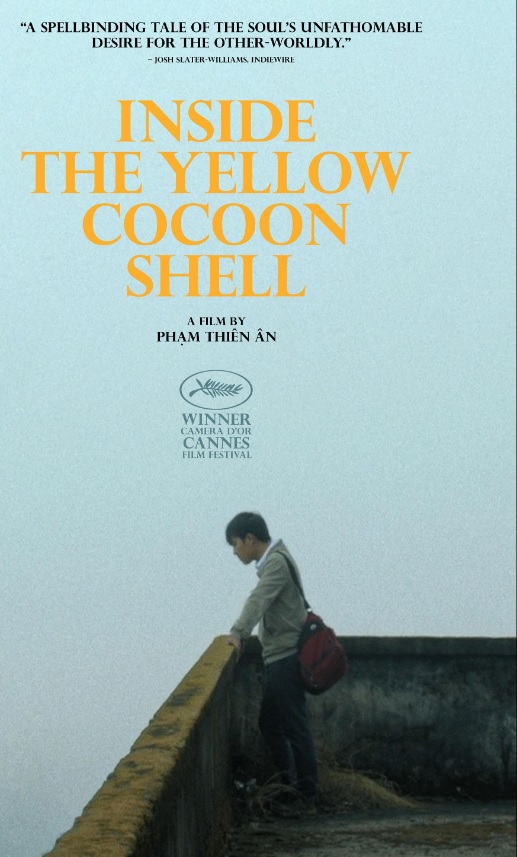
283. The Vietnamese director Thien An Pham’s debut feature film “Ben trong vo ken vang“ (Inside the Yellow Cocoon Shell) (2023), based on his original screenplay: Searching for faith and meaning in life, following a recent personal tragedy


“Faith is what I am searching for --answers the film’s main character, Thien, to his toddler nephew’s question, on what is faith, soon after his dead mother is described publicly as someone who had strong faith  
Would you give your favorite toys to your friend and did you think he would to return them to you?” Thien asks his nephew  
He will return them to me because he is good,” answers the nephew  
Faith is a little bit like that,” Thien explains to his nephew


Inside the Yellow Cocoon Shell is nearly 3-hours long, bereft of sex, violence, or crime. Further, it is slow-moving, philosophical, magical (literally and metaphorically) and charming--aspects missing in most contemporary American and British films. You don’t see fast cars in this Vietnamese film; instead you see mopeds that often breakdown, traversing dirt tracks more often than on proper paved roads. Much of what you see in the film is rural contemporary Vietnam with birds, animals and human beings sharing space and time. Cocks crow before dawn and humans wake early to trap wild, well-fed cocks that fight for fresh territory with others. This is not a film that could conventionally compete and win an Oscar. Yet, this film has won the coveted 2023 Golden Camera award at the Cannes international film festival , from amongst debut films competing in all the competitive sections of the 2023 festival. The Vietnamese film  was chosen in the ‘Director’s Fortnight’ section and won the coveted award that transcends the conventional borders of that particular section of the festival. A dream-start for a young, relatively unknown filmmaker’s career who scripted a mature screenplay with the lead character sharing the director’s name.

Thien and his toddler nephew accompany 
his sister-in-law Hanh's coffin to his village


What is remarkable about this work is the swathe of complex ideas that fill the film’s canvas as the young filmmaker Thien paints it. The film opens with a near-monologue over dinner for three in a small, crowded restaurant in Saigon over the opportunities offered in city life versus those in rural Vietnam. The ensuing film does discuss that in a meandering manner. What is equally remarkable is that the film’s cinematography and the diegetic soundtrack that could amaze perceptive viewers, who notice those aspects while watching a film over the more obvious narrative.   

Thein (back to the camera) listens to former soldier Lu'u
in his humble abode. There is no music, only diegetic sound. 


 As the film unspools, there are ordinary conversations between young and old, strangers and villagers who have known each other’s families over decades; small birds that enter the film’s narrative and then die, adding to the mosaic of lives offered in the film;  magic tricks to entrance kids (and even elder viewers of the film) with props such as a finger-sized bell that proves to have a tale of its own as the film progresses; and dialogs between different elders and Thien that reek of wisdom and philosophy rarely encountered in a film made by a young director. The connection between Thien and his elders are as mystical as varied encounters of Thien has with nature (rain, butterflies, sericulture cocoons, dreams of aggressive buffaloes that sense danger only to turn around, the soothing invitation of the flowing waters of a brook). 

Searching for his brother Tam,
Thien encounters the wise old lady who experienced
a near death event and has wisdom to impart for his search

After the conversation with the old lady, Thien falls asleep
at the same spot, and dreams of an encounter with buffaloes


On waking up, Thien has an urge to walk in the rain,
until encountering the shrub with white butterflies


Each character populating the film offers depth to the screenplay. Thiem’s brother Tam, who has suddenly left his wife and son, had wanted and to be a priest, until his theological teachers advised him to get married instead. Tam’s wife Hanh is described as a woman of “faith,” who wanted to give birth to her unborn child, even after doctors had warned her that the child would be born without arms. A former soldier who had fought in the Vietnam war and had once enjoyed war combats as a young man, explains to Thien that he no longer has interest in lucre even when it is offered to him by Thien and instead  prefers to live a humble life, preparing shrouds for the dead in his village. Then there is an old lady, who claims to have endured a near death experience, providing philosophical solace to Thien in his quest to locate his elder brother to inform him of his wife Hanh’s passing and of his son being admitted into a convent where Thien’s former sweetheart, now a nun, teaches the tiny tots.  

  
Thien gets closer to finding his brother Tam (a sericulturist) 
and holds Tam's child surrounded by yellow silk cocoons

Tam's new wife with Tam's child leads Thien to Tam's
work spot 


At Tam's work spot, Thien falls asleep, Tam's wife and child
disappear, and the farm owner (back to camera) states
that there is no Tam there. (For confused filmgoers. the
maroon bag on the moped is crucial to explain matters)


What is stunning is the long single shot of Thien holding Tam’s baby in his arms and the shot ending without cuts with Thien sleeping on his moped alone and being woken up by the farm owner who states that there is no person named Tam anywhere near his farm.  These are aspects (sleep, dreams, etc.) in Inside the Yellow Cocoon Shell that any knowledgeable filmgoer will recall of the Thai  director Weerasethakul’s superb film  Memoria, another cinematic tale connecting death, history  and the present or the long takes of the Greek director Angelopoulos, drifting in time within a single shot. The sudden rains (common in Vietnam and other parts of Asia) is intentionally used as a stylistic device to blur time and space. Inside the Yellow Cocoon Shell, as in Zvyaginstev’s The Return or Tarkovsky’s earth sequences in Solaris uses rain to invite Thien  on a dreamlike walk that offers images akin to Joycean epiphanies (white butterflies on a particular shrub in the rain). Could it be a mulberry shrub? The viewer is equally reminded of Theo Angelopoulos’ films (e.g., Eternity and a Day) of the historical connections of the Vietnam war and the present and the present through the memories of elders, such as the former soldier Lu’u, content making shrouds for the dead remarking that there will be no one else to do it, if he stopped doing it.


The last shot: Thien lies in the brook as the gently flowing
waters of the brook stroke his body
     
Inside the Yellow Cocoon Shell may not appeal to the millions who love commercial cinema and believe the Oscars, the BAFTAs and the Golden Globes honor the best in world cinema, oblivious of good cinema of a different kind being made elsewhere on the globe. That is where the three big film festivals of the world (Cannes, Berlin, and Venice) step in to alert us to the fact such films do exist.  Knowledgeable folks know that even Hollywood’s best filmmakers compete in those festivals for early valuable recognition before the Oscar circus.  
 
Thien An Pham’s Inside the Yellow Cocoon Shell has heralded the arrival of a new prodigy from Vietnam. This cinematic product amply proves that any young director with talent will get world recognition, if the film’s style and content are original and admirable, while specifically not spoon-feeding a lazy viewer on what the film is all about. A good film has to ultimately make the viewer think.     

P.S. Inside the Yellow Cocoon Shell won the Golden Camera award at Cannes, the Roberto Rossellini award for the Best Film at the Pingyao (China) and the Best Asian feature film award at the Singapore international film festival. Three films, mentioned in passing in the above review—Memoria, The Return and Solaris have been reviewed on this blog earlier and those reviews can be accessed by clicking on their names in this postscript. Inside the Yellow Cocoon Shell is listed by the author as one of  the Best Films of 2023.


Sunday, November 25, 2018

230. Vietnamese director Ash Mayfair’s debut feature film “The Third Wife” (2018) (Vietnam) based on her original story: Gorgeous cinematography, interesting visual allegory, female characters and actresses add value to a film that ought to make Vietnam proud!


Debut films of several directors worldwide have often been unforgettable, even when compared to their later works:  Orson Welles’ Citizen Kane, Satyajit Ray’s Pather Panchali (Song of the Little Road), Ridley Scott’s The Duellists, Steven Spielberg’s Duel, Jean-Pierre Melville’s The Silence of the Sea, Mike Nichols’ Who’s Afraid of Virginia Woolf?, Claude Chabrol’s Handsome Serge, Bertrand Tavernier’s The Watchmaker of St Paul...the list goes on.  That stamp of unmistakable awesome standards of filmmaking is apparent in Ash Mayfair’s debut feature film The Third Wife.

Within minutes of the film’s opening credits an observant viewer gets a clue of the quality of the film that follows—intelligent use of visual editing in presenting the title of the film and the aesthetic and delicate balance between silence and music on the soundtrack. The Third Wife is an original tale written by the film’s director. It is set in the 19th century Vietnam involving a rich nobleman living comfortably far away from the towns, with a retinue of servants, three wives of different ages, their progeny, and his father. The nobleman’s writ is the law in this remote household.  The film is set in a time frame in which men made the rules, when child marriages were acceptable, and when the birth of a boy was held at a premium for the parents over that of the birth of a girl.

May (Nguyen Phuong Tra My) as the 14-year old third wife

The title character of the film, May (Nguyen Phuong Tra My), is a 14-year-old child bride who has to travel by boat to reach her future husband’s abode.  She is welcomed by the entire family and household staff with pomp and feasting. The first wife Ha (Tran Nu Yen-Khe, who had earlier graced two significant Vietnamese films Cyclo and Scent of the Green Papaya) and the second wife Xuan (Mai Thu Huay Maya) welcome May with genuine warmth. The film narrates the tale economizing on spoken words but revealing much more visually by the brilliant camerawork of the lady cinematographer Chananun Chotrungroj, twice a winner of the Nestor Almendros (of Days of Heaven fame) award for cinematography. If the Spanish/Cuban maestro was alive today, he would have been delighted with the mastery of the visual elements from start to finish in The Third Wife.

The tale weaved by writer/ director Ash Mayfair, deals with the child bride’s interactions with the family members of various age groups over a period of approximately a year, learning quickly that to gain favour of her husband she has to bear a son and not a girl. Ms Mayfair’s tale is often visually edited to link her tale with the allegorical of life cycle of the silkworm—caterpillar, cocooning, fresh cocoon, cocoon with pupae, and finally a silk moth.  Why the silkworm? Evidently nobles of 19th century Vietnam saw silk as a valuable income source. And lots of silkworm pupae are killed while preparing the cocoons for making the silk threads. The tale of the film has obvious parallels between the mute silkworms and the human characters.

The pregnant third wife spends cordial time with the first and second wives

...and cordial interactions in the evening indoors.

The film has a predominantly a female production crew (writer/director, cinematographer, editor, etc.) and naturally the perspective is from a female viewpoint. Yet the feminism in the film is subtle, only making a silent but powerful statement towards the end.  Bereft of spoken words, the last ten minutes of the film is a fascinating recounting of critical past images from the film as recollected by the third wife May, who has matured over a year witnessing incest, patriarchal preferences to indulge boys over girls, the fate of children born out of wedlock among the servants, and the humiliation of a bride not accepted by her future husband.  The casting of May’s cute female child and the facial expressions of the infant captured by the film crew are highlights of the film. 

May's cute baby girl looking at her mother holding the
the yellow flowers, very significant to the tale


Though the ending of the film is ethically unacceptable, one gets a premonition that the last ten minutes of the film will be slowly accepted as one of the most powerful and sophisticated endings ever devised to end a feature film in recent years.

When director Ash Mayfair dispenses with spoken lines, she has two other tools beyond the camera. The music and wordless vocals (used for the end credits) composed by Ton That An (a Vietnamese male composer), and sound mixing (by Roman Dymny) that are ethereal. In a crucial point within the film, prior to a tragic development, the sound department introduces the sound of crows cawing though you don’t see them on screen (Russian director Andrei Zvyagintsev has employed this effectively in his 2011 film Elena). To Ms Mayfair’s credit, at no point in the film does the soundtrack seem overpowering—when you hear sound/music, it is soothing and calming to the viewer’s senses complementing the incredible camerawork.

Even interior shots are elegantly captured: a pregnant May,
 with the second wife's daughter

If there is a loser in this lovely film it would be the lack of emphases for details of realism. The film is a picture postcard view of Vietnam in the 19th Century.  Everything you see in the film is picture perfect, every detail of exteriors and interiors are dust free, polished and colourful.  The silk linen clothes hung out to dry in the sun are the whitest of white, the absence of mud and dirt on the feet of women walking in the night is unbelievable in a tropical country. So too are the absence of insects and reptiles beyond the silkworms and a single lizard on a mosquito net. Are there no snakes and other insects/ reptiles found in vegetated tropical Asian countries then and now?  Especially near bamboo groves at night?

Arrival of the third wife, May, by boat, to her husband's house


Ms Mayfair has thanked American director Spike Lee (of The BlackKkKlansman fame) among many others in the film's closing credits for the Spike Lee Fellowship she won as a student of New York University which enabled the development of the film.  Ash Mayfair has thanked the Government of Vietnam that lent a helping hand in making this high quality film in that country. The film’s highly talented cinematographer Ms Chananun Chotrungroj is also an alumnus of New York University and a recipient of the Ang Lee Fellowship. This film ought to encourage successful film directors to invest a part of their life’s earnings to develop new talents in filmmaking who otherwise would have never made a mark. Finally, Ms Mayfair choice of the actresses who played the three wives and their performances and her choice of the music composer also contributed to the incredibly well-made debut film. Even the poster of the film says a lot of the care taken to communicate the tale of the film intelligently.


The citation for the Gold Hugo for The Third Wife at the Chicago Film Festival reads:
"The Gold Hugo goes to The Third Wife. Ash Mayfair's lush, assured debut feature which follows a 14-year-old girl as she enters a wealthy household. Mayfair's unshakeable vision grants the women of this world an individuality their society rejects, treating them as creations as wondrous as the natural world that surrounds them, as the film builds to a staggering climax that devastates and thrills in equal measure."
P.S. The film has already won the Gold Hugo award at the Chicago Film Festival and the Royal Bengal Tiger Award for the best international feature film at the Kolkata International Film Festival. It won minor awards at Toronto and San Sebastian Film Festivals. The film was also part of the recent Denver Film Festival. The film is one of the best 10 films of 2018 for the author.