Sunday, August 08, 2010

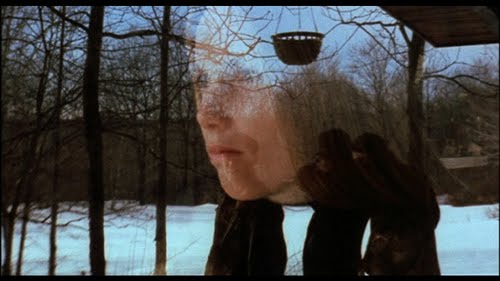
103. Australian director Peter Weir’s Australian film “The Last Wave” (Black Rain) (1977): Australian cinema at its best, connecting dreams and reality

Today, many filmgoers associate Peter Weir with his touching US movie Dead Poets’s Society. I, too, love Dead Poet’s Society for the message it conveys to its audiences and for the charming performances of its actors. But if the evaluation is based on the quality of the cinema, I would rate Weir’s earlier film The Last Wave, a film he made in his native Australia, to be intrinsically far superior.

There are several reasons why I consider Weir’s The Last Wave to stand out amongst Weir’s interesting and rich cinematic works.

First, unlike his more talked about films Dead Poet’s Society, Gallipoli, Picnic at Hanging Rock, Witness, The Year of Living Dangerously, The Truman Show, Fearless, and Cars that Ate Paris, all of which are either based on actual events and characters, or works of novelists, Weir’s The Last Wave is an intensely original personal story, conceptualized and developed by the director himself. It is inconsequential that the end of the film is left open-ended and is difficult to comprehend for many who prefer finite endings for movies. But then which parts of our life are fully finite and understood? In a fascinating interview available on the internet with the director, Ms Judith Kass reveals that Weir’s idea to make the film was initiated by an indefinable sudden urge to dig up a buried ancient statue of a child in Tunisia, after stumbling on another piece of the statue above ground, while on a holiday in that country. This incident led Weir to develop the story of this thought-provoking movie. For those who believe in spiritual coincidences, could there be a better reality tale?

Second, this is a rare attempt in the annals of Australian cinema to truly understand the Aboriginal inhabitant’s mind, values, and sacred beliefs with part sanction and approval from the Aboriginals themselves.

Third, some of the actors in the film were not “acting” in the true sense—they were portraying characters they had decided for themselves after they were satisfied with Weir’s script. In fact, a real life Aboriginal and tribal magistrate Nandjiwarra Amagula ‘plays’ the role of “Charlie” in the film, after incorporating his and other Aboriginals’ views on the development of that character. For Nandjiwarra Amagula, this was his sole movie appearance.

Most of all I love my favorite line in the film “Our dreams are shadows of something real.” And this is not Sigmund Freud, but the words of the original scriptwriters of the film—Peter Weir, Tony Morphett and Petru Popescu.

The film is essentially just that. It sways between dreams and reality. It toys with subconscious memories, rebirths, ancestral faiths, and relationships with natural calamities.


For Weir, the plot of the film balances the virtues of material wealth of modern Western society with the spiritual wealth of Aboriginals of Australia. It is also a tale of nature doing unusual things, when rain is not clean water but a dark liquid, when wind and rain can make you squirm with fear within the safety of your home and when you feel they are speaking to you, when waves from the sea can appear to be like a tsunami, literally or figuratively speaking. The Aboriginals seem to to know more about the strange natural phenomena than the richer and more educated European Australians. It is also a tale of how modern Australia has built cities such as Sydney over traditional Aboriginal land with artifacts and totems that may still be holy and sacred to the tribes that once ruled the land. And these artifacts could be truly buried under the sewers and waste outlets of modern cities.

The Last Wave is an inquiry into one’s subconscious as well. It is definitely not a thriller or even a horror film. The lead character David Burton (a decent performance by American actor Richard Chamberlain) of the movie is an Australian lawyer, who is supposed to have a South American lineage. He is defending an Aboriginal accused in a murder of another. He experiences strange dreams and feels he has an unidentifiable "connection" to one of the accused in the case. The Aboriginals in turn identify him to be a “mukurul from across the sea.” Weir develops the connection further as the plot progresses, as the character David shows a distinct affinity and curiosity for the Aboriginals. The same Aboriginals frighten David’s wife, while they mean no harm. As David encounters Charlie the Aboriginal to ask him why he had come outside his home and frightened his wife on a rainy night, and asks him “Who are you?” Charlie’s enigmatic response is “Who are you? Who are you? Who are you? Are you a fish? Are you a snake? Are you a man? Who are you?” An existential conundrum indeed, probably partly resolved when David picks up an aboriginal “mask” figuratively and literally, much later towards the end of the movie.

Weir achieves a rare feat in cinema as the film empathizes with the unknown instead of tending to rationalize the odd facts presented in the script. When I saw the film, some 30 years ago, it provided a great introduction to the emerging and throughly awesome Australian cinema of the Seventies. When I view the same film today I get the feeling of reassurance that Weir had somehow grasped the uncanny problem of vagaries of nature relating to water that Australians increasingly face as they wait for cloud bearing storms to survive the ever increasing water shortage on the continent. That he was not able connect this to the main tale adequately is unfortunate. Can Australia afford to forget the spiritual wealth of the original inhabitants of that continent as they grapple with nature’s vagaries even to this day?

Critics have pointed out that Weir was at a loss to close the tale and the apocalyptic end was not in the original script. If you reflect on the final scene of the film one could say that Weir truly couldn’t have ended the tale any better. It is a film that will make the viewer question many facts, dreams, and the freaky behaviors of nature. It need not be Australia-centric but has relevance to parallel global values.


Kudos for this nugget of cinema need to go not just to Weir, but to a host of other gifted Australians: cinematographer Russell Boyd, actor David Gulpilil, composer Charles Wain, and Oscar winning cameraman John Seale (obviously an apprentice in this film).


My appreciation of the film increased after reading Peter Weir’s interview with Judith M. Kass available at http://www.peterweircave.com/articles/articlei.html But the best lines in the interview are the following.

Judith Kass: What would you like your audiences to know about your films?

Peter Weir: I remember a quote of Bruce Springsteen's in Rolling Stone. He said, "I like to give my audiences something money can't buy." So I'd like them to walk out with much more than the $4.00 or whatever it cost.

If you have seen the movie, reflect on the importance of the original title of the film The Last Wave and perhaps you will get more value than $4! The Last Wave won the Golden Ibex (the Grand Prize) at the Teheran International Film Festival, 1977.

Thursday, July 22, 2010

102. US director Elia Kazan’s “The Visitors” (1972) (USA): Remarkable and disturbing cinema that forces the viewer to introspect


The Visitors is a remarkable film on a dark subject that becomes even more significant if you are aware of the dark side of the talented director. And more interestingly most American film critics have either ignored this work or trashed it.

The Visitors begins with hardly a sound on the soundtrack. The camera captures, in a long shot, a snowbound house. It is apparently early morning. Tree branches are covered in snow and icicles. A dog roams outdoors. It is evident the director, Elia Kazan, wishes to begin the ‘cinematic narration’ of the tale with a visual metaphorical distance. Lights come on in the darkened house as the inmates wake up. You see a male and a female figure come down from the bedroom upstairs to the living room as they peer outside from the window at the bleak snow covered exterior. There is some subtle body language that suggests that they tolerate each other, that they are comfortable with each other and yet somehow that they are not madly in love. Kazan deliberately does not add music to the soundtrack to please the viewer. The director suggests a cold and sombre tale is to unfold. And the film does prove to be a sombre, thought-provoking tale.

The Visitors ends with the same duo alone in the house. Only now both the camera and the two individuals shown at start of the film are inside the house. The indoors are dark and shadows seem to win over the light, unlike the beginning where light won over shadows. There is a new distance between the couple. There is no physical touching between the couple as in the opening sequence. The body language accentuates a distance between the duo. At the same time you note a discrete new bonding between the two that was obviously missing in the opening sequence as they look at each other. And again there is no sound on the soundtrack. Elia Kazan, the master director, in a way has captured a scream or a wail without the noise—and the silent scream or wail comes from within the director’s heart. This is Elia Kazan of East of Eden (1955) or On the Waterfront (1954) all over again. Yet strangely most Americans wish away The Visitors for some reason. Many would not realize that the The Visitors made the competition grade at Cannes, the year it was made. [It lost out on the major awards at Cannes ‘72 to three equally remarkable films, Francesco Rosi’s The Mattei Case (Italy) , Elio Petri’s The working class goes to heaven (Italy), and Andrei Tarkovsky’s Solyaris (Solaris) (USSR).]

In between the two sequences that I have described, Elia Kazan brings on screen an original script by his son Chris Kazan that obliquely mirrors the dark side of his father’s actions and its consequences in real life for his father. The Visitors is a tale of war crimes and the ripple effect of the revelations of such crimes. In Vietnam, two American army men rape and kill a young defenceless Vietnamese woman. A third American watches, does not participate even when asked to, and eventually testifies against his comrades in war. The perpetrators of the crime are punished. The man who was watching is tormented that he did not stop the rape and killing. He eventually becomes a pacifist after he is court-martialled following his testimony.

Chris Kazan’s story is about the aftermath of the incident. Will the soldiers who were punished forgive the man who testified against them? Will the 'father-in-law' of a pacifist ever come to terms with his 'son-in-law', when he himself is a war veteran of a different war, loves the traditions of the army and is still trigger happy, killing dogs instead of enemy soldiers?

The story on screen written by Chris Kazan has an uncanny parallel with his father Elia Kazan’s (the director of the film) life. Elia Kazan, a brilliant director, a former Communist in the US, chose to testify at the now-Infamous Joseph McCarthy hearings on Un-American Activities at the height of his career. He and some others like actor Robert Taylor named “names” following which several bright minds of Hollywood were blacklisted for life because they were suspected of being “Communists.” Some examples of the victims of this witch-hunt, direct and indirect, were talented directors Charles Chaplin and Abraham Polonsky. Many believe that the famous screen line that actor Marlon Brando shouts in On the Waterfront “I am glad what I done, you hear me? Glad what I done” reflected the thoughts of Kazan after his testimony. And like the Vietnamese war crime testifier, Elia Kazan had equal numbers of supporters as he had detractors. At the Oscar ceremony, where he was conferred a lifetime achievement award, several notable Hollywood invitees opted to remain seated and not applaud the recipient. Kazan had to bear the brunt of his testimony just as the anti-hero of The Visitors. The silent end of the The Visitors is a more powerful antithesis of the torment that made Brando's character shout the famous last lines of On the waterfront.

The two Kazans, Elia and son Chris, present a trenchant tale that provides a moral dilemma for the viewer. Can a military man squeal on his colleagues? Is morality higher than unwritten codes of military honor? In The Visitors, the anti-hero Bill (a worthy debut performance by actor James Woods) has testified against his comrades-in-arms and does not regret it. What he does regret is that he did not have the courage to stop the war crime. He carries the moral burden alone and does not reveal the details to his spouse Martha even though they have child through their live-in relationship, until she confronts him and asks for the facts. Martha’s father is a World War veteran, who gives more importance to military codes of honor and has scant respect towards the father of his grandchild, when he learns of the Vietnam incident from the visitors to his daughter’s house. The visitors are the perpetrators of the Vietnamese war crime who have served their time and are now visiting the man who sent them behind bars.

The film is interesting beyond the obvious interaction between “the whistle-blower” and the criminals. It looks at the characters on the periphery. Martha, who wears glasses and long skirts before the arrival of the visitors, opts to discard the glasses and wear short skirts, which adds another dimension to the straight development of the story. Martha’s father, viewing a game on television, equates life to two teams, nothing more, as it is in war. The Kazans develop a character who, like Martha, seems to give sanction to the events that follow. He even invites the un-invited visitors to stay on.

I believe The Visitors is a well thought out collaboration between father and son exploring the trauma of a man ostracized, a man not considered a virile man when you are a pacifist, a man who believes in his values that might not concur with the majority. Further the film explores the psychology of various characters in the film and their individual grey values. Does a man who says “I forgive you” really mean it? Can a woman who had earlier appreciated the moral stance of her spouse, allow an evil-doer to dance and hug her shortly after the appreciation of her spouse's moral stand? These are grey areas on which questions only a tormented man can ask. I believe this is a Kazan film from the heart of the filmmaker, more explosive, more personal and introspective than any of his previous films. Just as David Lean’s film Ryan’s Daughter was trashed by critics for myopic reasons, Kazan’s The Visitors has a rare individuality and maturity that you only glimpse in his other films. It deserves to be widely seen and re-evaluated now. The importance of the disturbing film is captured and distilled in the final sequence of the film, silent and yet so evocative!

Friday, June 18, 2010

101. Chilean director-in-exile Raúl (Raoul) Ruiz’ French/Swiss film “Ce jour-là “(That Day) (2003): More sense than meets the eye

Raúl (Raoul) Ruiz, for me, is the most fascinating Latin American filmmaker alive, who is directing films today. It does not matter that he no longer lives in Latin America. It does not matter that he no longer makes films in the Spanish language. It does not matter that he is living in Europe and is considered a European filmmaker by some. Because of its language and its cast, Ruiz’ film Ce jour-là (That Day) will be considered by some as a typical French film. It will be seen by others as a European film because its subject involves Switzerland. But for those who know Ruiz, the film is all about Chile and Latin America, without any overt comment to that effect.

That Day is a fascinating film—a film that can easily be mistaken for a Buster Keaton comedy film or a simplistic dumb cartoon-like comedy for simpletons. In reality, this is a film that provides a fabulous cocktail for the senses of an erudite viewer, combining elements of the Theatre of the Absurd, politics, crime, innovative ideas in cinematography, theology, and cinema aesthetics. It is a film in which the principal characters are either mad or mentally challenged. But then every other character in the film does not behave normally. Is the mentally challenged then, more normal than others? To truly appreciate Raúl Ruiz’s cinema, one needs to know where he is coming from (literally and figuratively). Director Ruiz is a student of law, theology and theatre and each of his films hark back to those influences. In 1968, he was the films advisor to Salvador Allende’s socialist government in Chile. In 1971, he was forced to go into exile after Pinochet overthrew the Allende government.

Many Latin American cinema aficionados would not recognize the name of Raúl Ruiz. And then many, who may be aware of the name, may not consider him to be a major filmmaker, even though he has been living and making films that make the competition grade of Cannes and other major film festivals, with a frequency that is enviable. The main reason for this is that this Chilean filmmaker no longer lives in Chile, or for that matter in Latin America. He lives and makes films, often in French, while in exile in Europe. And his films do not appear to be “Chilean” or even Latin American. Yet look closely, and each Ruiz film is a lamentation of an exile, an essay on his weaning away from his native land. That Day is no exception.

Today, Ruiz’ contemporaries like Miguel Littin (who I can claim to have hugged me like a lost friend in far away Dubai, some 5 years ago, following a spirited one-to-one conversation on Littin’s early movies in a movie theatre foyer following a screening of his latest film The Last Moon, with Miguel‘s daughter interpreting for us) are considered true heroes of Chilean cinema, but not Ruiz. For me, only Littin’s Alcino and the Condor and The Jackal of Nahueltoro are somewhat comparable to the intellectual robustness of Ruiz’ films that I have been lucky to see so far. Littin, who lives in exile in Mexico, has paled in comparison to Ruiz, who is truly blooming in France, Germany and Switzerland, while in exile.


Raúl Ruiz has made some 50 films and unfortuntely I have only seen two and a half of these. And those few have floored me. They provide images that are not easily erased. The first Ruiz film that I saw was Three Crowns of the Sailor (1983) some 20 years ago, a film that tossed reality and unreal images with a felicity that recalled Orson Welles’ witty and brilliant mockumentary and last official feature length film F for Fake (1973). Only much later I stumbled on the fact that Ruiz was a great admirer of Welles. I suspect the wit in the Ruiz’ film had much to do with Welles’ remarkable last film. And as Ruiz’s father was a sailor the connection to Coleridge’s poem Rime of the Ancient Mariner is not misplaced. The film is a lamentation for Chile that Ruiz cannot forget.

The second one is That Day,  to which I will revert in detail presently. The “half film” of Ruiz I mentioned is a fascinating 3-minute segment called Le Don Ruiz made as part of the portmanteau film by 32 of the finest living movie directors from around the world using some of the most enigmatic of actors and this collective film was called To each his own cinema (Chacun son cinéma ou ce petit coup au coeur quand la lumière s'éteint et que le film commence) (2007). In those three brief allotted minutes Ruiz, taking a leaf out of sociologist Marcel Mauss' Essai sur le don, gets the French actor Michel Lonsdale to play a “blind” priest, a true faithful of God, who gifts a radio and a movie projector to aboriginal south American Indians (from Chile?) for their upliftment. The innocents tribals turn the gifts into items of barter and ritual sacrifice, which ultimately reach other Europeans who quickly jump to classify the Indians as “blind atheists” while depriving the Indians of their “access” to sound and images (typically cinema).

To comprehend Raúl Ruiz’ cinema, one has to understand who he is and what makes him tick. First, he is a student of law, theology and theatre. In the two films that I have seen all three streams of study play vital parts in the final product on screen. Then, Ruiz is essentially a Chilean director making films in exile in various European countries, ever since Salvador Allende’s government was overthrown by Pinochet. In both the Ruiz films that I have seen, the images of Chile percolate through the European images. As some critics have pointed out, the very “absence of Chile” underscores the Ruiz commentary on his homeland. Laughter in his cinema is an unreal one, suggesting lies rather than truth. It is often a laugh of a sad individual. Finally, Ruiz is a director who loves to experiment with technology of cinema that would leave a true cineaste stunned with his innovativeness.

Is That Day a simple tale for simpletons? I am sure there are some viewers who believe it to be just that. But let me remind those viewers that the film is made by a director who once said, "If you can make it complicated, why make it simple?"

Ruiz’ has stated in his book Poetics of Cinema: “Often, and at times immodestly, I have made use of metaphors in order to approach intuitively certain ideas; many of which could best be described as images and half-glimpsed visions. I hope that among them it is the angelic smile rather than the sardonic irony or the biting impetuousness that has the upper hand. ‘Metaphor’ is a word that has a bad reputation among theorists. To use it implies that one does not have clear ideas, and in that case, the best thing to do is to remain silent. That may be so and I regret it. Yet, in the present state of the arts: does anyone have clear ideas?”

It is therefore not unusual for a viewer to emerge after a Ruiz film totally unclear of what was presented on screen. Ruiz’ cinema often has a dose of the Theatre of the Absurd (termed as surrealism, a related term, by those unfamiliar with theatre). In That Day, a diabetic psychopathic murderer starts shaving his face in front of a door, using the translucent glass as a mirror. It is absurd, especially when you are capturing the actions with a camera from inside the house. But then one has to go beyond realism. Ruiz’ cinema maybe reminiscent of slapstick cartoons but he offers much more. What is the house representing? What is the world outside and inside representing? The Pinochet violence in Chile? The closest overt statement of linking Chile to Ruiz’ tale (his own original script) is the movement of military trucks in a Switzerland “overrun by the military sometime in the future” at two key points in the film. The Pinochet regime was a military backed regime.


Many impatient viewers would miss the fact that the film is an oblique look at Pinochet’s insane violence in Chile towards supporters of the democratically-elected socialist Allende government that made Ruiz and Littin flee the country. There are macabre images of an entire grown up family killed sometimes by a lunatic and sometimes by an innocent woman who throws a hammer carelessly. I wouldn’t be surprised if the Danish director Lars von Trier was influenced by 2003 Ruiz film That Day when he filmed his unforgetable hammer-killing 3-minute segment within a cinema hall in the 2007 film To each his own cinema, (referred to earlier).

That Day is also about detectives solving murders by doing nothing in a café. The clues come to their feet in the form of gossip. But then one has to read beyond the obvious. Under dictatorships “gossip” plays a role different from gossip in democracies. That Day is also a tale of two abnormal people in love dancing to the tune of the ringtones of the cell phones belonging to a pile of corpses they have just killed. That Day is a film that even discusses multinational companies targeting the natural resources of specific countries (water of Bolivia) and the wealth of Switzerland. It is also about people wanting to covet other's property even if the person targeted is within the family. That Day is an intellectual journey that throws hundreds of political and social messages at the viewer. Whether Ruiz’s messages get to you, depend on individual viewers.

Time is an important element in Ruiz’ cinema. In That Day a character comes up to the camera lens and cleans it. Cineastes will love the act. But wait, Ruiz soon reveals from a reverse angle shot that the person was not cleaning the camera lens but face of an old clock thus underlining the connection between camera and time so essential for Ruiz’ tales on celluloid. The female lead in that day sates early in the film “Tomorrow is the best day of my life according to the runes and I Ching” Time is important for Ruiz as he constantly switches between past, present, and future providing links for the alert viewer. The title of the film That Day, is not without deep references.

Theology is equally important. In Le Don, one saw a blind priest trying to bring “light” of conventional religion to non-religious tribals. In That Day, the principal character talks of fallen angels and equates a man who falls of a bicycle as one such angel.

Ruiz’ preoccupation with cinema as medium is not to be discounted. The visual effects of the diabetic murderer feeling uneasy are remarkably innovative. So is the way food on a fork held in animated suspension in air for an unusual duration between plate and mouth underscoring both humor and fear.

Finally, it is tale of love. The murderer will have to go back to the asylum. But in typical Ruiz' black humor but it is the "crazy" murderer's new lover who inherits the financial control of the asylum. So all is not lost for those who are considered crazy by those who are also crazy in their own way!

The message did not get to the Cannes Jury with two beautiful actresses Aishwarya Rai and Meg Ryan, who I suspect had no idea of the Chilean references or the intellectual depth of the film. The Jury in its wisdom gave the top prize to the less impressive Gus van Sant’s Elephant, probably because of the immediacy of campus violence in the US. I guess many would not appreciate Orson Welles' F for Fake, as well. One man’s meat is another man’s poison.

Friday, April 30, 2010

100. Australian director Andrew Dominik’s US film “The assassination of Jesse James by the coward Robert Ford” (2007): A psychological maze


I
confess that this movie made me fall asleep after the first half hour. When I woke up, certain images from the film persisted in my memory (Roger Deakin’s play with light and shadow of the approaching train), nagging me to view the film once again from the start. To my surprise, on my second attempt, I found it to be one of those rare films which do not provide much evidence of good cinema in the early sequences while it provides such evidence much later on. And this is a rather long (2hr 40min) film. However, the film gradually entices the viewer to keep watching with the filmmaking competence improving as the film keeps un-spooling. By the end of the movie, it is quite likely that a patient viewer will not feel cheated by the director Andrew Dominik but instead admire his work that is a cocktail of delicate performances, suitable music, and admirable cinematography.

Long titles often summarize the plot of a film. The killing of the outlaw Jesse James is miniscule to the long tale of psychological games between various characters in the film. Here is a case of fictional biography (what an oxymoron!) authored by Ron Hansen and written for the screen by the director Dominik. While the assassination itself forms the fulcrum of the film, Dominik divides the film at that juncture. First he presents the buildup to the assassination and the second part is the reaction to and the aftermath of the event. Much shorter than the earlier one, it is the second half that truly makes the film come alive.

One would usually associate the word assassination with leaders, political or religious. Here is a tale of an outlaw who killed human beings as he would kill snakes (shown in the movie). Yet ironically he captured the hearts and minds of an entire nation. Here is a tale of a robber of banks and trains. Dominik and Hansen present a revisionist view of the outlaw Jesse James (Brad Pitt), an outlaw wearing clean clothes and a typical family man. The viewer is made to empathize with the dapper Jesse James, the moody Jesse James, the loving Jesse James who gifts a gun to his would be killer…The clouds in the film have a touch of Terence Mallick’s cinema as much as the absurdist visuals of a man taking a bath in a bathtub in the middle of a field. This is not surprising as Dominik is stated to be a fan of Mallick’s Badlands and Mallick in his turn thanks Dominik in the credits of the latter’s The New World.

The film appears to be tale of a fan and a larger-than-life hero. A hero has to be a loner—he not one of us lesser mortals. It is therefore no wonder that Dominik/Hansen’s outlaw sits alone brooding in a backyard close to snakes that he is about to kill to make a point. It is no wonder Dominik/Hansen’s outlaw is one that his own blood brother Frank (Sam Shepard) gradually distances himself from a normal sibling relationship. The filmmakers take great pains to sketch the toll of the evil deeds of the outlaw on himself while journalists and fans think of him differently. The bounty on his head does not help the disintegration of a normal mind that sees enemies and turn tails among his buddies. The repressed anger and frustration comes out on screen as Jesse shoots at a fish in a frozen lake. It is no small wonder that Brad Pitt won the best actor award at the Venice film festival for the role.


T
he unusual merit of the film is the hero Jesse James in part recognizing his would-be assassin Robert Ford (Casey Affleck), much in advance of his death. He not only quick with his gun, he is quick on the uptake. The silent pact of a Jesus and a Judas is insinuated between the all-knowing outlaw, who after going to the church with his family uncharacteristically keeps his gun away to dust a painting on the wall, and the eventual killer. One could argue that this "Jesus" of the American wild west needs a "Judas" to keep his notoriety alive. The many confrontations between the hero and the fan add up to a cat and mouse game that is captured delightfully by the camera, a twitch here and a look there, and the game is up. Even the Mallick-like nature shots by the impressive Roger Deakins add an underscore to the visual details of the battles between coward and hero.

One of the defining lines of this psychological film is when Jesse James (Pitt) asks his fan and eventual killer Robert Ford (Affleck): “Do you want to be like me or do you want to be me?” Sometime later the fan replies after introspecting “Heaven knows I would be “ornerier” (sic) if I were in your position.” To reduce the film to interactions between hero/anti-hero and coward would be incorrect as the characters take on different hues in each sequence just as the clouds captured by Deakins and Dominik in the movie are ephemeral, changing colors and shapes with time (note the poster of the movie above).

The script goes into top gear after Jesse is killed. Casey Affleck’s character was so far shown in the movie as a fan of 19 going on 20, looking for a chance get rich with the bounty money. The disintegration of the “coward” is more interesting than the disintegration of the “hero”. The first part had shown an assassin hero-worshiping his victim, with homosexual overtones of even sleeping in his bed before the kill. The second section shows him as a heterosexual and exhibiting signs of a courageous man confronting a balladeer (Nick Cave) to correct him on his facts. The scenes of the re-enacted assassinations are lovely studies in human psychology. Affleck’s Oscar nomination for his performance was well deserved.

Over the years I have been amused to find fine Australian talent migrating to USA to make movies. Andrew Dominik is not the first. One recalls Peter Weir who could never recreate the magic of Picnic at Hanging Rock or The Last Wave after crossing the Pacific. Big budgets and Hollywood’s rules seemed to stifle him with some of his latent talent emerging in Dead Poet’s Society. Bruce Beresford is another Aussie director whose work in Australia (such as Breaker Morant) was a tad better than the Oscar winning Tender Mercies and Driving Miss Daisy. It is equally true of a slew of actors Mel Gibson, Nicole Kidman, Russell Crowe, et al. Or the case of the amazing Australian cinematographers Russell Boyd and John Seale, who have both made a mark in recent times with new technology rather than the creative surges evident in their early Australian works. It is no wonder that Dominik chose Australian musicians, Nick Cave and Warren Ellis, to lend a fabulous musical score, over American musicians.

In retrospect, this American film, shot in Canada, with all the Australian talent behind the camera, is different from other regular American films. Two remarkable directors, the Scott brothers—Ridley and Tony—have partly bankrolled the film. Evidently they had confidence in Dominik to make a rather unusual American film. Revisionist films have been made in the US but have never been highlighted by most film critics. A particular film that I would put in perspective is Abraham Polonsky’s less-fictional biography Tell Them Willie Boy is Here (1969) with Robert Redford, Katherine Ross and Robert Blake. Unfortunately, the talented Polonsky was blacklisted by the McCarthyists. Dominik need not have such fears as his film only looks inside minds of men and women, not the politics of bounty-killing.

Dominik has made an interesting film. I wish the mettle of the latter part of the film was evident in the earlier parts to make a viewer sit up from the beginning of the film. And last but not least, enjoy the unobtrusive music that adds to the richness of the film. A more pertinent evaluation of the film would be to focus on the word "coward" than the word "assassination" in the title of the film. If one reflects on the movie, it is basically a study of hero worship rather than of heroism or of cowardice. It is also a study of how the larger population reacts to heroes and what the journalists write about them. For a while the assassin is the hero for many; later he is not. Arguably, the film is not just about Jesse James or Robert Ford. It is about us.

Author's note:  As this is is the hundredth movie discussed on this blog, I thank all the readers who have written to me with useful comments or words of encouragement.

Saturday, April 03, 2010

99. Japanese director Yojiro Takita’s “Okuribito” (Departures) (2008): Amazing grace of handling dead bodies

Many viewers would be touched by the tale of an aspiring cellist, who accidentally becomes a mortician (an undertaker or a funeral director, to some) when he loses his dream job with a symphony orchestra. Many would even be stupefied by the ingenuity of the filmmakers to pick up a seemingly unique subject such as “encoffinment” as a subject for a feature film. Many others would be in awe of the Asian traditions that respect the dead, the elderly, and the institution of marriage until (and beyond!) “death do us part”. Many others would be equally intrigued by the Asian traditions that consider associating any profession relating to the dead as being somewhat demeaning and not worthy of public stature.

Director Yojiro Takita’s film is loosely based on Aoki Shinmon’s autobiographical book The Coffin Man, which was subsequently adapted for the screen by the scriptwriter Kundo Koyama. While Takita and Koyama need to be complimented on deciding to bring to the big screen a heartwarming tale of a disappearing tradition of subcontracted morticians in Japan, there is the strange overpowering element of music that is pivotal to the somewhat mysterious organic development of the movie’s plot and in all probability this is obviously disconnected to Shinmon’s original tale. As I was intrigued as how the duo of Takita and Koyama added the powerful element of music to the tale, I stumbled on a detail available on the Internet that the lead actor in Departures, Masahiro Motoki, was a member of a band before he took to acting and that the film Departures was a direct outcome of the actor reading Shinmon’s book. Evidently, Motoki had much to do with development of the final Takita-Koyama collaborative effort.

The film is overtly an essay on the art of taking care of the dead under the gaze of family members and friends. It is also a film that details the dressing of the dead body while covered by sheets and the application of make-up on the corpse to make it resemble the best living memory of the dead person, all the while ensuring that there is no disrespect to the dead and living present in the room. Yet the movie offers much more entertainment and reasons to introspect than these facets of the script that could be attributed to Shinmon’s book. A sub-text of the film deals with reverse urban migration, of going back to the villages as urban employment becomes unpredictable and unstable under recession. Much later in the film there is mention of salmon returning upstream from the oceans to die. The metaphor becomes one of the many Shintoist references where life’s patterns can be understood by studying nature. Here is a movie that attempts to improve life and marital compatibility by having a closer look, not at death, but at the dead.

There is somber black humor—a lovely dead girl is discovered by the morticians to be a transsexual during the embalming; typos in advertisements hilariously bring the world of morticians close to that of travel agents; and the viewers are shown a coveted meal of an octopus, disappearing into the waters of a canal because those who were to devour it realize it the sea creature is still alive and then decide to release it into natural freedom. Dead or live octopus, the film is replete with comparisons of the dead with the living and vice-versa. It is not without a connection when later in the film an elderly mortician, a widower, speaks like a sage—“The living eat the dead, unless they are plants”—as he cooks a puffer roe, the size of a poultry egg, surrounded by live indoor plants and an image of his dead wife who he fondly remembers.

Takita’s Departures won the coveted Best Foreign Film Oscar and the Grand Prize at Montreal Film Festival apart from some 30 other awards. This would not be surprising for anyone whose hearts rule their minds. If one looks closely at the honors the film has garnered, these are basically for the director, the actors, and the sound technicians—all well deserved. Yet the mainstay of the film, for me, was the music composed by a talented Japanese called Joe Hisaishi, violinist and composer, who transformed parts of Beethoven’s 9th Symphony, Brahms’ Wiegenlied, and Bach’s Ave Maria as the basis of his own musical compositions for the film Departures. Joe Hisaishi is a stage name that the composer chose to indicate his fascination for the US composer Quincy Jones as Hisaishi is close to Quincy in written Japanese. Now Hisaishi is a name to watch for in film music as his music already has played a role to the success of at least three recent films—Spirited Away, Princess Mononoke, and restored sound version of 1920’s silent Buster Keaton’s The General. And surprisingly not one of the thirty plus awards has gone to the talented composer.

A keen viewer of the film will recall the scene in the film where the cellist finds a jagged stone next to his cello with the musical notes of a piece called The Wayfarer. I can only guess the piece of music relates to Mahler’s The Wayfarer, a song of grief sung by the singer waiting for the beloved. The film has a subplot of the cellist turned mortician coming to terms with disappearance of his father when he is quite young, but already showing flair to play the cello. When the cellist finally gets to meet his father after harboring hate towards his missing parent for most of his life, he finds out his father is dead with just a cardboard box of possessions to leave behind. He has to embalm his dead father, with his dead fingers clutching a symbolic smooth stone. The viewer is never told why the father left his wife, while we can guess that the father whose gifts to his only son ranged from written musical scores and stones, both rough and smooth, was in remote touch with his son, while the son takes time to put the pieces together. Finally, why did the filmmakers choose the cello over a violin or a viola for the lead character's favorite musical instrument? Avid filmgoers might get a likely answer to that question by viewing Fellini's under-rated classic Orchestra Rehearsal (Prova d'orchestra) made in 1978.

This Japanese film can be lauded for its many virtues—a fascinating subject that is ecumenical (as it shies away from being typically Shinto or Buddhist, while one of the dead has a Christian/Jewish name, Naomi), endearing performances from the lead actor Masahiro Motoki and Akira Kurosawa’s stock actor in later films Tsutomu Yamazaki (Kagemusha and High and Low), beautiful adaptation of western classical music, and finally an uplifting theme of how any job can elicit respect of others if done well. It is no wonder the Oscar voters loved it, as this Japanese film meets many of the values that Hollywood traditionally celebrates.

Yet after the watching the movie, I wondered if any of those who thought the Japanese film was unique had ever seen a brilliant Iranian mockumentary film called Bitter Dreams (Khab-e Talkh) (2004) which deals with a parallel story of “encoffinment” of dead Muslim bodies in Iran. While encomiums are well deserved for the director and scriptwriter of the Japanese film Departures, the gaping holes in the story makes you wonder how this film could beat its co-nominated French film Laurent Cantet’s The Class in the eventual Oscar race in 2009. The film never explains the sudden exit of the cellist father from his life though both his parents never remarried, and his mother retained his father’s music record collection. The film never explains the need for the implicit father-son communication through rocks, smooth and jagged, even though rocks occupy an importance in Shintoism. The film never clarifies why the jagged rock came wrapped in the notes of The Wayfarer. The film never explains why the octopus that was to be eaten is freed, when the same individuals eat and enjoy dead chicken. There is mention of death being a “gateway” in the film but there is no discussion of afterlife in the film. For me Departures could have more fulfilling if the trio of Takati, Motoki, and Koyama had developed the film a wee bit further developing the suggested Shinto imagery in the film of birds realigning their positions in formation flight, of stones, and of salmons. It would then have not just won the hearts of the viewers but also their minds. Then the deaths would truly be “food for thought” of the living.


P.S. The Iranian film Bitter Dreams and the French film The Class have earlier been reviewed on this blog. A trivia for those interested: Takati, Motoki, Hisaishi and Yamazaki are all December born!! Do they also think alike?

Thursday, March 11, 2010

98. Iranian director Asghar Farhadi’s “Darbareye Elly” (About Elly) (2009): A vignette of modern Iranian society

When a country such as Iran puts restrictions on its citizens' creativity, it is not surprising that great works of art emerge with a certain vengeance and vigor that free society rarely produce. We saw this in the former USSR, and cineastes were rewarded with the great works of Kozintsev, Tarkovsky and Parajanov. As I write this review, Jafar Panahi, another talented Iranian filmmaker, has been arrested. His friend and peer Abbas Kiarostami has appealed for his release. It is not surprising that the list of Iranian films winning recognition worldwide grows longer by the day.


About Elly won the Silver Bear (Best Director) award at Berlin, one of the top three festivals in the world. Apart from this recognition, the film has already won awards at four other lesser festivals (Asia-Pacific, Brisbane, Tribeca, and the International Film Festival of Kerala) and at Iran’s national festival at Fajr. It was Iran’s submission for the best Foreign Film at the 2010 Oscars.

What is the film about? As in the case of most Iranian films it has no sex or violence and yet provides clean entertainment for adults. It is a tale of how we view others, however close or distant we are. It’s a tale of value judgments we make in everyday life. Now these value judgments could often be colored by small lies or exaggerations that could leapfrog into greater problems that one could ever imagine.

The story line is basically of a young unmarried woman Elly who joins three families on a vacation to the Caspian Sea coastline of Iran. Elly has been invited by Sepideh to spend a night with the three families, Sepideh being one of the three wives in the group. The only relationship established between the two is that Elly teaches Sepideh’s child at school and that Elly could be paired off with one eligible divorced male in the group if the two get to like each other. While the elders are busy playing volleyball or away shopping, a child nearly drowns and is rescued. Elly, who was asked to keep an eye on the kids, disappears. Has she drowned? Has she left for the city as she had wanted to? Her mother, in Teheran, is not aware of where she is vacationing. Why is that?

The tale is cleverly developed from that point of Elly’s disappearance by Farhadi, who is also the co-author of the story and the screenplay-writer. There is another co-author of the tale, Iranian writer-director Azad Jafarian. Thankfully, the group tells the police only facts as they knew at that point of time. The lies emerge later. Even a well-intentioned joke that Elly is a newly wed, a joke stated to get access to an accommodation at the holiday spot spirals into complications later in the film. And so on. The film goes beyond social comment and a thriller. Relationships get shattered. In a way, it recalls the ending of Nuri Bilge Ceylan’s recent Turkish film Three Monkeys and easily could be called “Three Monkey Families.”

What nagged me was the situation in the film where parents enjoy themselves but do not keep an eye of their kids playing near the sea, until things go wrong. Is this modern Iran? Is this modern Asia?

Here is a film that has a very talented cast including Golshifteh Farhani, who plays the pivotal role of Sepideh. Ms Farhani is arguably one of the finest actresses from Iran. She has appeared in Mehrjui’s Santoori, Kiarostami’s Shirin and Ghobadi’s Half Moon. It was not surprising that Ridley Scott cast her in his 1979 film Body of Lies. It is not just actors that carry the film but the script and direction are noteworthy. For instance the film has a fascinating kite flying act by the film’s character Elly. The beautiful sequence forebodes the events that follow. Yet this is not the finest example of Iranian cinema. I prefer the works of Mehrjui among the many great filmmakers of modern Iran and, of course, Bitter Dreams, the brilliant debut film of the young Mohsen Amiryousefi. Unfortunately, Asgahr Farhadi, who is definitely an interesting filmmaker, has yet to make a film that can truly rub shoulders with the very best from that country.

While film deserves all the adulation it is receiving and will receive, Indian viewers will recall a similar tale filmed by an Indian director Mrinal Sen from a story by Ramapada Chowdhury. The film was called Ek din Achanak (1989) which competed at the Venice Film Festival some 20 years ago and even received an honorable mention from the jury. Like Elly disappears in About Elly, in Ek din Achanak, a professor and head (played by Dr Shreeram Lagoo) of a family, that included his two daughters and a son, suddenly disappears without explanation or trace. That Mrinal Sen film had also developed a parallel story to that of Farhadi.

While Farhadi’s work can be appreciated in isolation, Indian cineastes ought to compare and contrast the two works separated by 20 years. In December 2009, Mrinal Sen had inaugurated the 14th International Film Festival of Kerala where About Elly was in the competition section and eventually won the Golden Crow Pheasant for the best film. It would have been ironic if Sen was there to hand over the grand prize to Farhadi, which would have marked a 20-year cycle of similar ideas being presented on screen from two different filmmaking nations.


P.S. Two Iranian films Shirin and Bitter Dreams and the Turkish film Three Monkeys mentioned above have been reviewed on this blog earlier. Farhadi's later work Nader and Simin: A Separation has also been reviewed on this blog.

Saturday, February 20, 2010

97. Indian maestro Mrinal Sen’s “Khandhar" or "Khandahar” (The Ruins) (1984): Touching sensibilities, tugging at our conscience


My friends are amazed that I should rate a Mrinal Sen film among the very best in world cinema. In fact, there are two films of Mrinal-da that I rate very high—Oka oorie katha (a film in Telugu language based on the Munshi Premchand tale Kafan) made in 1977 and Khandhar (made in Hindi language). These are two films, for me, which raise the bar of quality of Indian cinema, decades after they were made.

Mrinal Sen is an acknowledged Leftist. Yet a viewer of Khandhar will not come across Communist propaganda or even a red flag. There are no political speeches. The Mrinal-da of the overtly political Chorus-that won awards at Moscow and Berlin festivals apart from top Indian national honors--and Calcutta ’71 cannot be recognized as such in Khandhar.

Why then do I rate Khandhar so high? Is it because it won the Golden Hugo at Chicago or the Special Jury Prize at Montreal film festivals? Is it because it won the Golden Lotus the highest national award in India and the best actress award that year? Is it because it had a talented ensemble cast of Naseeruddin Shah, Shabana Azmi, Annu Kapoor, Pankaj Kapur and Mrinal Sen’s wife Gita Sen? For me, Khandhar was fascinating because it was a point of departure for Sen the director of Chorus, who had matured as a filmmaker and had come to accept that true greatness lay within the ambits of understatements rather than overt statements, political, psychological or social.

The opening credits of the film roll as a smalltime still photographer develops his prints in his developing room in Calcutta. The last picture he develops is of the well-balanced image of a Bengali lass among the ruins of an old mansion, with moss and weeds threatening to overshadow brick and mortar. But you soon realize the tale relating to that photograph (captured on still and moving film by the late cinematographer K. K. Mahajan) is yet to follow. The photographer is a middle-class young bachelor. Adorning his studio wall is the awesome still photograph of thespian Vasudeva Rao in Mrinal Sen’s earlier film Oka Oorie Katha (the other favorite of mine from the Sen-Mahajan combine!).

The tale is simple. Three young men, including the photographer Subhash, decide to go to a distant village for a short vacation. One of the young men has an ancestral house tucked away in the interiors of West Bengal. Evidently the house once provided shelter to a rather rich owner. The former symbol of pelf and power has fallen to crass neglect by its few inhabitants to the extent that neither public transport nor electricity is within easy reach. Only god seems to be in touch—as there is a temple and a priest in the environs.

The denizens of the ruins include a caretaker and his visiting daughter (Sreela Majumdar), a bedridden blind widow (Gita Sen) and her quietly demure and faithful daughter (Shabana Azmi) who has been betrothed to a young man who has never returned to claim her for a wife for several years. And there is a white goat that this darling daughter tends, not unlike actress Irene Papas' character in Michael Caccoyannis’ (Mihalis Kakogiannis’) 1956 film Zorba the Greek.

The film could easily be viewed as an unrequited love story between an urban photographer and an intelligent beautiful village woman caught in a time warp. The interaction is brief between Subhash and Jamini but indelible not unlike Alexis and the Greek village girl with a goat in Caccoyannis’ cinematic gem. The words spoken are few between the two protagonists in Sen’s film but the emotions captured are endless. Even the ruins seem to speak..

But the questions the viewers would ask are many. Will the lovers meet again and marry? Probably, not. Is that what the film is all about? The film asks the viewer several questions indirectly. How many of us act according to the dictates of our conscience and our hearts? Most of us prefer not to act, not to rock the boat, not to swim against the current. And there are the hundreds of Jaminis, less beautiful and less intelligent, caught within the chains of honor, family ties, religion, birth, and financial constraints, who cannot truly bloom and show their true capacities and capabilities to the world. One can mistake them as shadows unless they are captured on film as Subhash/Mahajan/Sen did.

The true power of the film lies in its understatements. The chemistry between the two strangers comes alive when a well meaning Subhash tries to cheer a blind widow by pretending to be her future son-in-law. It’s a white lie. When a white lie is spoken, many characters in the film indicate their discomfort, yet no one acts. This is a situation that one encounters so often in life. We tend to question the liar, as in the film, but do not act ourselves.The film is a tale of meaning well but never actually getting down to changing the social, psychological and political status quo. It is somewhat like the clever editing in the film of a man tottering off a steep staircase, which Sen crisply follows up with another scene recording the sound of a bucket falling into a well to withdraw water. No one has fallen--we, the viewers, assumed it. That’s cinema that suggests more than the reality. Khandhar is a subtle film that packs a tough punch. Many might forget to note that this is arguably and deceptively the strongest political film that Sen ever made. The open ending actually helps the film further. A viewer might be forced to accept the ligitamacy of the main protagonist uttering a white lie to comfort an old blind woman. But how many will travel the whole nine yards to rescue the Jaminis of this world?

That Ms. Azmi won a national award for this role would not surprise anyone. But then a perceptive viewer will note that most of the actors in this film were trained in acting schools and could etch out their roles with a depth rarely associated with Indian cinema. The performers were not providing eye candy for the viewers or mere theatrics. Here was an example of restrained, yet detailed evocation of inner turmoil. (The only sore thumb was when Sen used the celebrated actor Om Puri's voice for a minor character in the film.) Both Sen and Azmi were at their finest fettle in this film. It is a story co-written by Premendra Mitra whose story Kapurush was used by another giant of Indian cinema Satyajit Ray. It is important for cineastes to note that Mrinal Sen is one the only Indian filmmaker to win awards at almost all the major festivals of the world--Berlin, Cannes, Moscow, Karlovy Vary, Chicago and Montreal--and an honorable mention at Venice.

Monday, February 08, 2010

96. Japanese maestro Mikio Naruse’s "Yama na Oto" (Sound of the Mountain/The Echo) (1954): Underlining profound Asian sensibilities


Mikio Naruse’s cinema will appeal to many as it hits sensitive spots in the hearts and the minds of the viewer without resorting to the impressive tools of modern cinema, specifically special effects, stylized camerawork and use of sound and music, which contemporary film directors fall back on to mesmerize audiences. Naruse’s cinema is unpretentious, recalling the works of Satyajit Ray. Most cinema lovers forget the trio of Japanese masters who contributed a great deal to world cinema--Kurosawa, Ozu and Naruse. Unfortunately, Naruse was the least exposed of the trio to Indian and western audiences but he enjoyed domestic recognition. Decades later, critics are rediscovering Naruse.

The story line of Yama na Oto might not make audiences of the Western world sit up. That is because the concept of strong women characters holding families together is never a selling theme in the Americas and Europe.

This Naruse film is all about family values. The male head of the father is concerned about his son who is leading a wayward life after marriage. He is equally concerned about his daughter with two children of her own who is struggling to keep her marriage from falling apart. While most western audiences and audiences in Westernized Japan might accept this changing male attitude, tradition and values are important for the old man and a considerable cross section of Japanese society even today. The relationship of a woman towards her parents-in-law is another aspect etched out with care in this film. Here, the daughter-in-law is devoted to her parents to a fault and the parents-in-law reciprocate that by showering love and respect for her. However, the underlying tension that Naruse builds up is between a wayward husband and a dutiful, smiling wife, efficient and gracious to all who encounter her.

This Naruse film is also paean to the virtues of being an intelligent woman, sensitive to all family members who depend on her. At the same time, this is not a doll toiling away in the kitchen but a person who can take incredible mature decisions by herself without consulting others of whether she should procreate within a bad marriage or continue to hold the marriage and defy the wishes of her doting parents-in-law.

For cineastes who loved Kurosawa’s Ikuru, the final shot of Naruse’s Yama na Oto would strike a chord as father and daughter-in-law walk away, almost hand in hand from the camera. The camera makes you realize ironically that they are two remrakable individuals who in another life would have made a great couple, if they were not separated by age. (In Ikuru, it was the tragedy of a single, lonely individual captured in a bleak winter. Both images invite comparison and contrast.) Human relationships can be truly wonderful when one gets to appreciate the moral strengths of individuals that often lie hidden as though their real faces were behind a Noh (Japanese theater form) mask. This, incidentally, is a subject of conversation in the film Yama na Oto. A mature worldly face can change into an angelic childish face with the aid of a mask. Somehow the final shot of Yama na Oto made me recall the the end of the somewhat contemporary 1997 French film Nettoyage à sec (Dry cleaning) where the relationship of a married couple is examined through a cathartic finale, using Occidental values of cinema. Even Lars von Trier's The Anti-Christ does the same. But these examples of Occidental cinema rely on sex and violence to communicate with the viewer--a necessity which Naruse consciously rejects.


It is this aspect that the erudite American film critic Susan Sontag found most interesting in this film. Not the Noh mask but the performance of the lead actress is what she found amazing. Sontag found the performance of the Setsuko Hara in this film one of the finest performances ever on screen. If you see this film, you will concur with Sontag, as the lady is able to transform from a childlike angelic personality into a strong-willed modern woman. She not only surprises her on-screen father-in-law but the audience who never expect the events that follow. Naruse and Hara are truly amazing as they weave magic.

Naguse’s peer Akira Kurosawa once stated “(In the films of Naruse,) a flow of shots that looks calm and ordinary at first glance reveals itself to be like a deep river with a quiet surface disguising a fast-raging current.” To some the film might remain as a great adaptation of a popular Nobel Prize winning Yasunari Kawabata's novel, which I have not read. But to others like me it is true cinema, the images, the acting and direction, which in combination makes the film a treat to watch.

I do wish that TV channels and DVD stores make films of Naruse, Ozu, Mizoguchi, and Kurosawa more accessible to viewers worldwide. Here’s a film on sex and marriage without any sex on screen. Here’s a film on character and morals. Here’s a film on true heroism—the story of an ordinary housewife, not a swashbuckling hero on horseback! Even in black and white, this 1954 film for me will remain a major work of cinema.

Sunday, January 31, 2010

95. Cuban director Tomas Alea’s "La última cena" (The Last Supper) (1976): A remarkable, trenchant Cuban classic

Cuban cinema does not often deal with religion; it is more at home with Leftist ideals. Its pro-Communist subjects have probably led prominent Western film critics to stay away from discussing major works of cinema by Tomas Alea and Humberto Solas. Cuban cinema rarely made waves in Hollywood circles. Yet Alea’s 1994 Cuban film Strawberry and Chocolate did manage to make the final Oscar foreign film shortlist, which is an unusual milestone for Cuban cinema.

Since many Cubans remain devout Roman Catholics, for any Cuban filmmaker working within the Communist regime any reference to any religion in a Cuban film has to first get official blessings. Tomas Alea, having already made two major films Memories of Underdevelopment and Death of a Bureaucrat, was widely accepted as a Cuban hero of cinema and could afford to play with religious themes without raising the ire of the Communist leaders in Cuba.

So Alea decided to make a film using the metaphor of Jesus’ Last Supper with his 12 Apostles by crafting an interesting feature film around a historical event that took place in Cuba at the end of the 19th century, where a white slave owner with a conscience decides to wash the feet of 12 of his black slaves and host a lavish dinner for them. The event is timed to coincide with the Passion Week Thursday (or Maundy Thursday). The film is broken into the segments--Ash Wednesday, Maundy Thursday, Good Friday and Easter Sunday. The real event was first captured in the historical book written a certain Moreno Fraginals, which I have not read. Alea used the book as the basis of this film. I am not sure how much of the intellectual credit of this cinematic work rests with Fraginals and how much with Alea and his co-scriptwriter Maria Eugenia Haya.

For the Communists, the entire film is a dark tale of slave owners and slaves, of black slaves toiling hard to make their owners rich and powerful. Alea uses the tale as a metaphor for the eventual escape and liberation of one slave on Easter Sunday in line with the Resurrection of Christ. But I found the film offers much more than the simple tale of the liberation of three types of the oppressed--one a slave, one a Spanish priest, and one a cross-bred colored sympathizer of the slaves who earned a living working for the slave owners.


Alea, just as another Leftist screenwriter Robert Bolt did in Rolland Joffe's Hollywood movie The Mission, is able to pinpoint the duplicity of the Church that gave implicit sanction for slavery to flourish. In The Last Supper, Alea seesaws between the somewhat contradictory portrayals of the priest first as a clown (the object of mirth for both women and slaves) and later as a more respectable individual, if he was to be compared to the slave owners. A similar ambiguity can be seen during the opening credits when Alea mischievously zooms in on a religious painting and gets the cinematographer to first show the religious figures in the clouds but later zooms in and lingers on the roses and thorns nearer terra firma. All this is shown with delightful negro voices singing a superb uplifting spiritual classical chorus on the soundtrack.

In the film, Alea presents three types of the Cuban population, the white slave owners, the black slaves and the colored cross bred population (represented by the sugar miller). Alea’s astute script shows the changes in the perception of all three communities during the Passion Week. A slave gains freedom and is able to resurrect in his own way on Easter Sunday. A religious Spanish slave owner who wants to emulate Christ and seek pardon for his sins, soon transforms into a monster when the slaves truly seek freedom that he granted days ago. A Spanish Catholic priest is buffeted between God and 'Caeser' (the slave owners who provide the Church its money). He is shown departing from the sugar estate, a broken man.


However, the real high point of the film is the brilliant dialectical conversations between the slave owner and the 12 slaves during the last supper on Maundy Thursday. It is a thought-provoking debate on what constitutes real happiness. One African slave talks of how he himself sold his father into slavery for the sake of money, and later how he himself was sold as a slave by others in his own family. Similarly, there is a trenchant reference to Judas and his treachery that could have deeper meanings as the slave who is liberated is the Judas equivalent in the film--a comment that would come close to the theological discussions of Martin Luther, Thomas Aquinas, and St Augustine of Hippo.

While many viewers will see the film as a slave vs. slave-owner tale, the film throws up more trenchant morsels that make you think. Why does an African tribal sell his own father for money? Why does money and wealth corrupt all of us so much that family relationships seem less important? Most tales of slavery put the blame squarely on Europeans and other wealthy races who subjugate others to acquire more pelf. But Alea's film/Fraginal's book shows the evil lurks in all of us, including the African slaves.

The film also encourages the viewer to look at freedom vs. slavery more closely. When a slave is given freedom he prefers his world of slavery--just as a long-serving prisoner is more comfortable behind bars than in the complex world of freedom and its constant demands on life.

Even more interesting is how the European slave owner switches from intellectual piety to extreme cruelty and intolerance. What is this dualism in each of us? The film will provoke many who care to reflect on the contents--the Judas question being the most profound one of all.

This Cuban film is arguably the finest work of Alea on par with his brilliant black comedy The Death of a Bureaucrat. And since Alea is considered the most important Cuban director, this film could well be considered as one of the the finest Cuban works on celluloid. The moot question is whether Alea was deliberately raising moral, theological, and psychological questions beyond the typical "revolution of the oppressed" Leftist chorus or did he stumble on a book/script that asked those questions? In the case of Rolland Joffe's The Mission, it is quite evident that scriptwriter Bolt was the astute thinker while Joffe was quite at sea at how to put together Bolt's vision. In this case, Alea puts across all the questions to the patient and perceptive viewer. But does the credit go to the filmmaker alone or to the historian or perhaps the scriptwriter?

I was viewing the film at the 14th International Film Festival of Kerala (within a section paying homage to the most important works in Cuban cinema) after a time lapse of some 30 years following its screening in Bangalore, India, in the1980 Filmostsav. Alea was present at that 1980 screening and I had the honor of interviewing him as a film critic. Alea kept telling me that as an Indian who who did not know the Spanish language, I was missing subtle innuendoes in the script with the differences in the Spanish spoken by the slave owners (European Spanish) and what was spoken by the others (Cuban Spanish) in the film. For me, the film remains a great work that offers considerable fodder for thought beyond the obvious storyline. It has not paled with time.

Thursday, December 24, 2009

94. French maestro Jacques Rivette’s “Around a Small Mountain (36 vues du Pic Saint Loup)" (2009): Deceptively simple cinema


To appreciate Rivette’s cinema one has to look beyond the obvious show—in this particular case a traveling circus in France, a circus that attracts less than a handful of people each night. And they don’t even laugh at the clowns. So when some does laugh, the laugh itself is a show stopper!

At the 14th International Film Festival of Kerala, many viewers of the 81-year-old French film director Jacques Rivette’s latest work Around a Small Mountain trooped out midway. The die-hard Rivette fans, some 60% of the audience, remained in their seats to the very end. The film is not everyone’s cup of tea.
 
Rivette’s cinema, in the case of Around a Small Mountain and all the films that he has made in the past has a mix of comedy, romance and mystery. In Around a Small Mountain, the comedy is obvious even to a village idiot but its relevance is what one is forced to ruminate on. What make one laugh at a clown in a circus, and why does another person not react to the same clown for the very same action? Comedy for the French includes tragedy—there is a thin vein of that element as well in this work of Rivette as in all his earlier films.

In India, filmgoers are familiar with the theme, if they have watched Raj Kapoor’s Mera Naam Joker. The only difference was that Raj Kapoor spoon-fed his audiences with ideas he wanted convey. In contrast, Rivette does it with style and discretion for the audience to figure out the latent, subtle meanings.

Around a small mountain is also a tale of romance. A mysterious handsome Italian man (Sergio Castellitto) fixes the car of a stranded elderly retired French circus artist (Jane Birkin), while she is stranded on a lonely road. The Italian fixes her car without uttering a word. This sequence is amazing. The seeds of romance are thrown. One would expect the woman to fall in love with this knight in an expensive sports car. But the reverse happens. That’s Rivette’s cinema.

Birkin has aged and is almost unrecognizable, if one recalls her roles in the French New Wave film of the Sixties. (Birkin is the real life mother of the lead actress in The Anti-Christ), For Birkin fans, she walks on a tight rope, a foot above ground in a fabulous single shot. There are no stunt doubles for her!

There is mystery as well. The Italian stranger remains an enigma. Who is he? There is also a mysterious death in the history of the circus troupe, which is unraveled slowly.

It is also a tale of chance—chance encounters where two individuals meet by accident. There is the frumpy Kate (Birkin) wearing clothes that make her look older than she is and a younger Vittorio who is in elegant casuals. Rivette drives home the opposites.

But at the end of the movie, the viewer has to figure out the obvious question. The circus troupe with just three or four persons for an audience cannot be real or cost effective. So how real is the circus? The director is using the concept as he would use theatre as another tool to tell us another aspect of our lives. The English title of the film is Around a Small Mountain (the French title is 36 vues du Pic Saint Loup). There is a mountain captured in the film’s opening shots. Evidently much of the action takes place in its environs. But to an intelligent viewer, Rivette’s mountain is not the physical one. It is a metaphor for the leading lady’s dark memories.

This is an unusually short film of Rivette (under 90 minutes) in contrast to his other films that last 2 hours on average. One could argue at length if this is Rivette's best work yet. But one cannot deny that this is a significant contribution to cinema. It was nominated for the Golden Lion at Venice Festival.


There were cat calls during the show from viewers who would have preferred a Raj Kapoor style of direction. But Rivette’s cinema is to be enjoyed at a different level altogether. One has to remember the circus was a mere prop for a 81 year old master filmmaker to tell a tale of life, where one (here the Birkin character, Kate) runs away from realities but return to same place to recognize them anew. The film for me reflected T.S. Eliot's poetry “And the end of all our exploring will be to arrive at where we began and to know the place for the first time.”

Monday, December 21, 2009

93. Iranian director Abbas Kiarostami’s "Shirin" (2008): Audacious experimentation that’s awesome

No feature film has ever been made this way.

Shirin, the latest work of Iranian director Abbas Kiarostami is based on a love myth of Khusrow and Shirin, a literary 12th century love saga of a prince and a young woman named Shirin, a tragic tale cutting across the borders of Persia and Armenia. And then again, the film is not about the love saga because you don’t see the film, you only hear the sounds of an elegantly made film and see the corresponding light and darkness of the virtual film falling on the faces of 114 of the best actresses in Iran and of Juliette Binoche, a famous French actress of cinema. What you hear is what would be a delightful radio drama of the tale made into film that you never get to see. What you see instead is a canvas of beautiful women emoting to this virtual film.

The film Shirin is an audacious experiment, in which for 92 minutes you are subjected to watching the faces of different women in a movie hall watching a movie of the tragic love tale of Shirin and her two lovers Khusrow and Farhad, one is a prince and the other a sculptor. The interesting trivia you need to know is that during the packed screening of the film at the 14th International Film Festival of Kerala that the entire audience stayed enraptured in their seats for 92 minutes of the film without a single cat-call, totally in awe of what was happening. Earlier, delegates, like me, had stood in line hours in advance and many had to go back disappointed unable to enter the theatre.

For those who have not heard of Abbas Kiarostami--he is a 69-year-old poet, photographer, painter, graphic designer, screenplay-writer, film editor and an art director of films.

Two questions bounce at you while watching Shirin.

Are there any men in the film? There are two men Khusrow and Farhad, in the virtual film that we only hear voices of. However, in the filmed audience too there are men but you see them in rows behind the female faces. Kiarostami has made a film on the reactions of women towards a famous tragic epic poem. Tears flow, eyes look away and then back again, each subtle movement capturing the emotions of the viewer. Obviously, the director is not interested in the men’s reactions. He is interested in the women’s reactions. This becomes apparent towards the end when the virtual film is heard stating “There is a Shirin in all women..” or words to that effect.

Will such a film ever make money? It is a minimalist film that would surprise even the most dyed-in-the-wool cineaste. Once you are inside a film hall watching Kiarostami, you are hypnotized. You would not leave the hall. I did not, nor did the hundreds who saw the film with me, some sitting on the aisles. But the moot question is would I have come to see the film in the first place, if I was aware of what I was going to see? Probably not, having assumed that it would be boring experience. Yet having seen the film, I would state otherwise.

Kiarostami is a genius, an audacious one. He has realized one fact. The audience matters as much as the story. Therefore, you need to look through the camera-eye at your audience. Through close-ups. In a way, the entire film is an ode to close-ups in cinematography. It is a also a formidable work of editing, one could point out the range of emotions do not include laughter and contentment. Theatre directors and film directors all know the importance of their audiences. After all they succeed or fail because of the audience. Here's a film that captures the all-important audience through close-ups. Kiarostami, the filmmaker, turns into a psychiatrist and a Svengali of the audience instead of the actor!

This work of Kiarostami is at a deeper level capturing the fears and hopes of the average Iranian through a catharsis of a movie watching experience. Had he used only the ugly faces of Iran’s women this might not have worked but actresses like Golshifte Farahani (Sepideh of About Elly) and Niki Karimi (The Hidden) are faces of the gifted beautiful women, whose faces never make the audience of Shirin look away.

Kiarostami and Dariush Mehrjui are great filmmakers on par with best in the world. Kiarostami set up a famous film institute when Mehrjui made his famous film Gaav (the Cow). That institute can take the credit of being instrumental in making Iranian classics like Naderi's The Runner. But these film-makers can never be taken for granted and have to work within a system that reduces the scope of what they can film as subjects. Documentary and fiction merge often in Kiarostami’s cinema just as it does in Shirin. So do themes of love and death. That too plays a role in Shirin.

P.S. Abbas Kiarostami's Tickets (2005) has been reviewed elsewhere on this blog. The above review of Shirin has been cited as a reference in the book "Film and the Ethical Imagination" by Asbjorn Gronstad, University of Bergen, Norway. 2016. (Publishers: Palgrave/Macmillan)


Try to catch up with this film—because it is a totally different experience you’re not likely to forget. It is on one plane a folk tale, on another a tale of what makes an audience react the way they do, on yet another the options of entertainment for a woman in Iran how she reacts to those limited options, and finally how a clever director can manipulate the audience.

P.S. Some major Iranian films including Gaav and  The Runner have been discussed earlier on this blog.